Water Damage Restoration Azle, TX
Water moving across a slab floor reaches baseboards, cabinets and drywall within hours. The extraction crew pulls it out, then the drying team dries the structure to the IICRC S500 standard.
Covers ZIP 76020 and 76098 on both the Tarrant and Parker County sides, plus the Eagle Mountain Lake area.

Water damage restoration services in Azle, TX
Water and sewage only, from the first extraction pass to the final dry reading. Pick the problem in front of you to see how it is handled and priced.
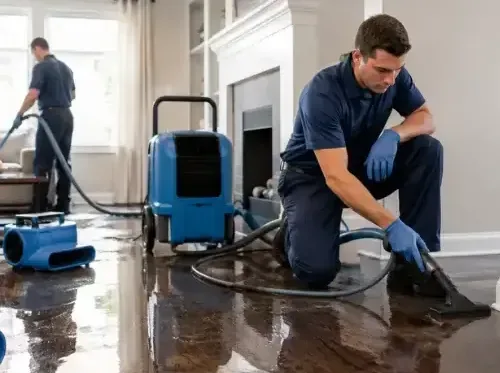
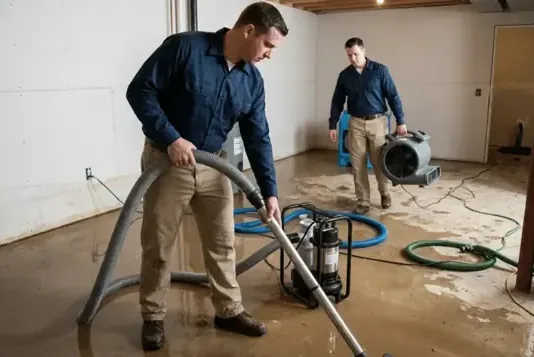
Water Extraction and Removal
Truck-mounted and portable extraction pulls standing water off slab floors and carpet before it wicks into wall bottoms.
View service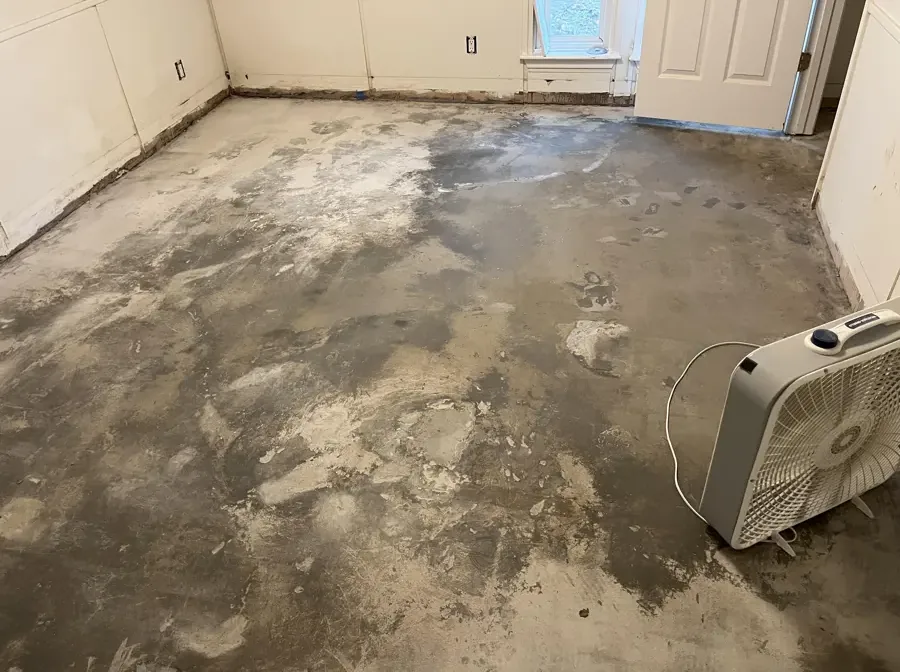
Slab Leak Water Damage
A hot or cold line leaking under the slab is traced by a plumber, wet flooring comes up and the concrete is dried.
View service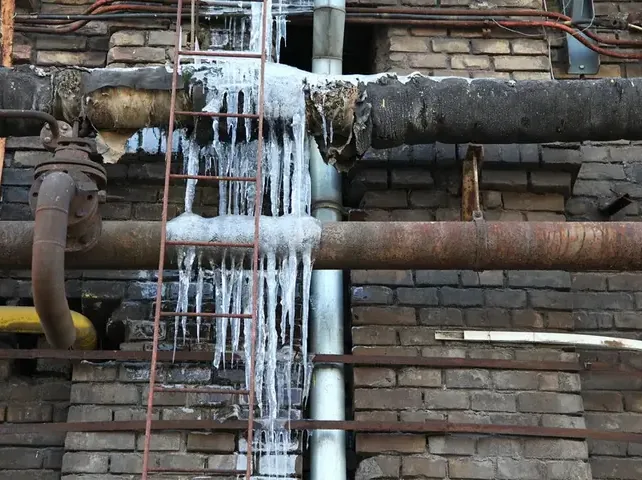
Frozen Pipe Water Damage
Lines that split in a hard freeze get found on the thaw, then extracted and dried behind the walls.
View service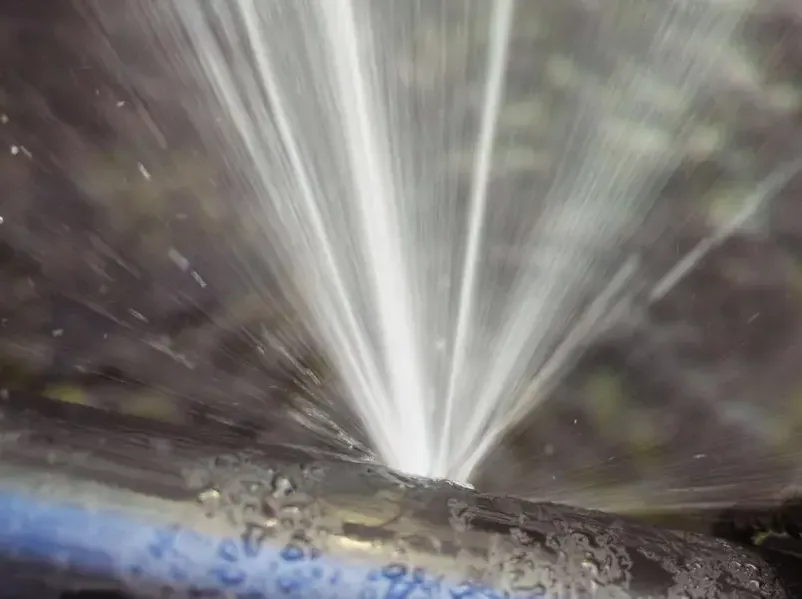
Burst Pipe Water Damage
A supply line that lets go inside a wall or attic is shut down, extracted and dried cavity by cavity.
View service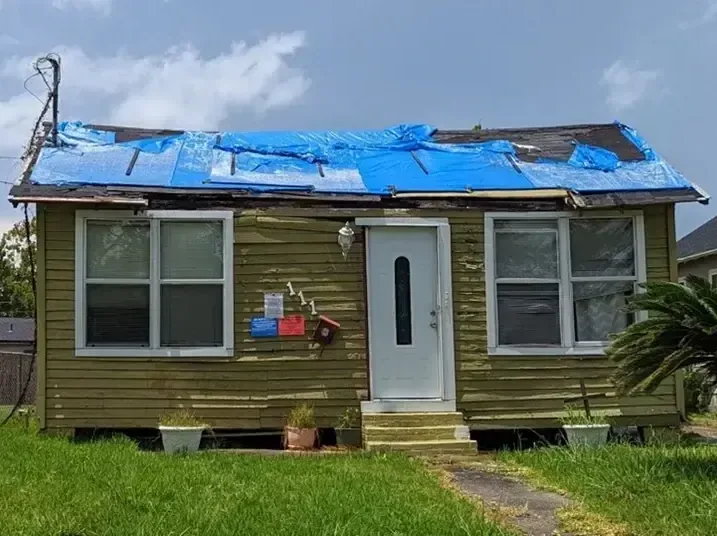
Storm and Flash Flood Cleanup
Creek overflow and storm runoff are treated as contaminated water: mud out, porous materials removed, structure dried.
View service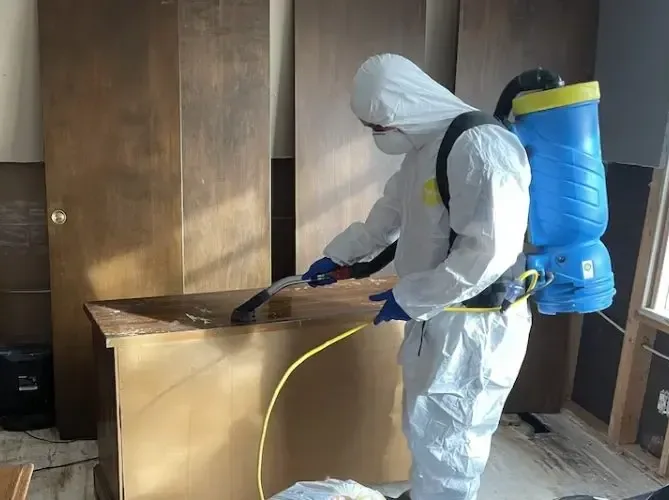
Sewage Backup Cleanup
Toilet, tub and floor drain backups are handled as Category 3 from the start, with full protective gear.
View service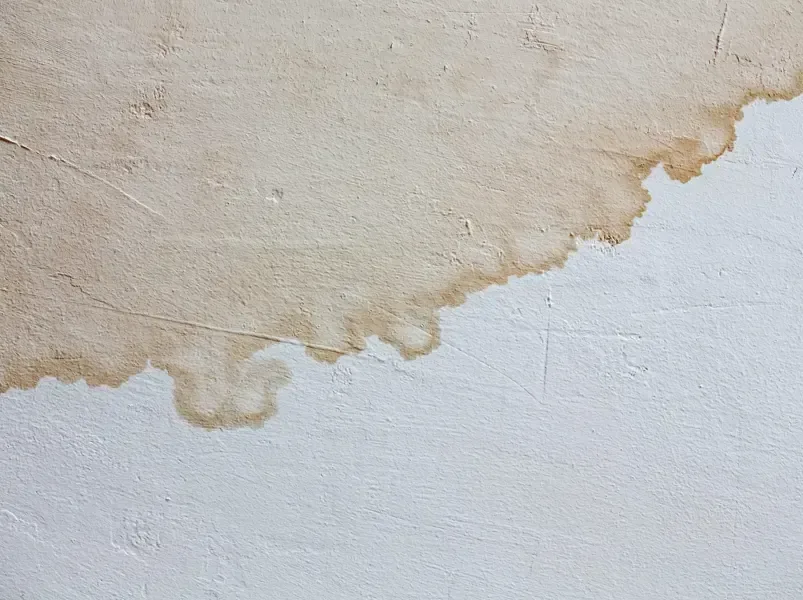
Roof Leak Water Damage
Wind-driven rain through shingles or flashing soaks attic insulation; the wet insulation comes out and the ceiling is dried.
View service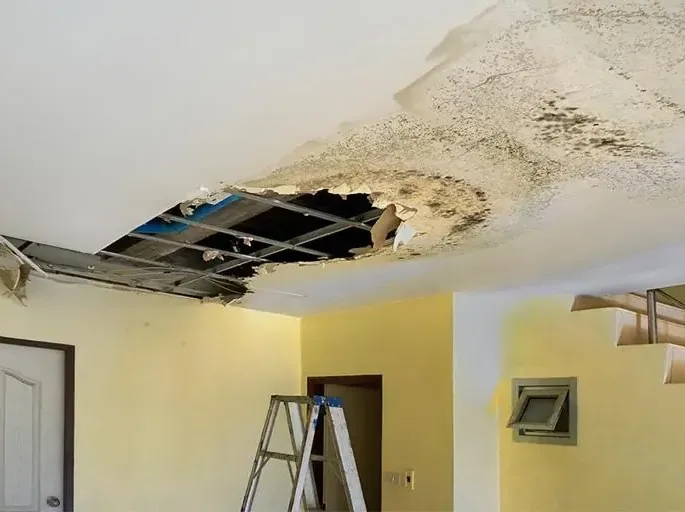
Ceiling Leak Water Damage
Bathroom, attic line and HVAC drain leaks are traced, sagging drywall is opened safely and joist bays are dried.
View service
Water Heater Leak Cleanup
A failed tank in a garage or closet is extracted before drywall, cabinets and stored boxes soak through.
View service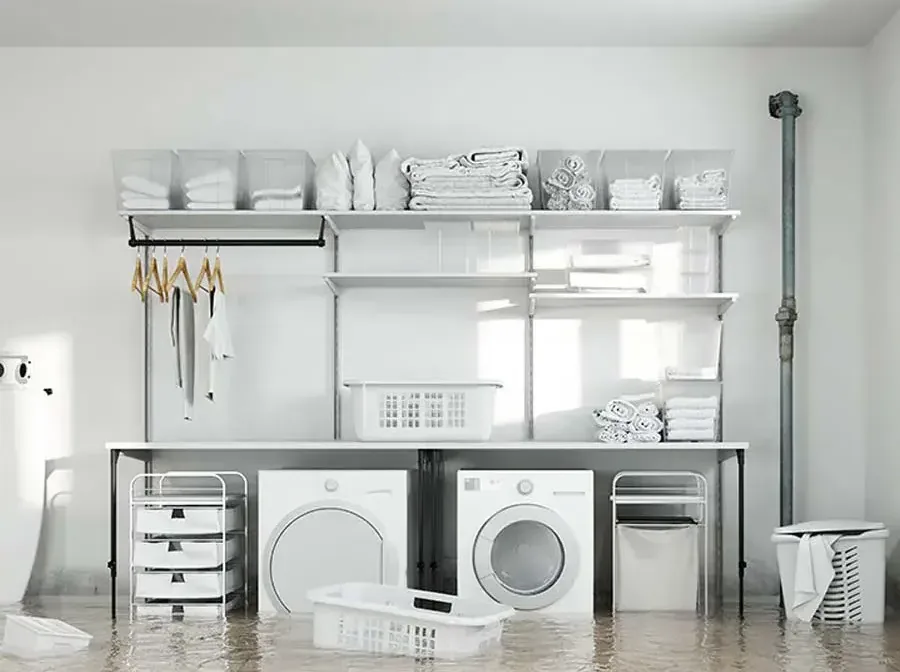
Appliance and Supply Hose Leaks
Washer hoses, dishwasher lines, ice makers and toilet supplies are traced, and the water is pulled out of floors and cabinets.
View service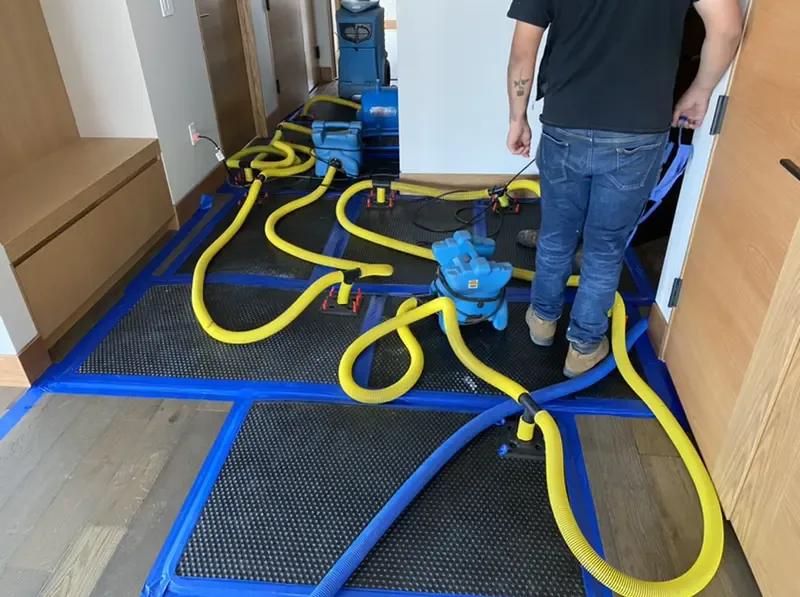
Structural Drying and Dehumidification
Framing, subfloor, slab and drywall are dried until readings sit within 2 to 4 points of a dry reference.
View service
Commercial Water Damage
Shops, offices, churches and rental buildings are dried in phases so the doors can stay open.
View serviceA dry-out measured in readings, not guesses
Every job starts with a moisture map and ends with documented dry readings, so the claim file shows what was wet, what came out and why.

Urgent at any hour
Active water is treated as urgent day or night, weekends and holidays included, because every hour adds wet material to the job.
IICRC S500 drying
Air movers and LGR dehumidifiers are sized to the class of loss, and they stay until the readings say dry.
Claim-ready records
Moisture maps, daily psychrometric logs and timestamped photos are taken before any drywall or flooring comes out.
Local water know-how
Freeze splits, slab leaks, creek runoff and sewer backups top the list here, so crews check those spots first.
What actually dries a wet house
Fans from the garage do not dry a slab, a wall cavity or a subfloor. Professional drying pairs extraction power with dehumidification and daily measurement, and the equipment stays until the numbers agree.
- Extraction. Truck-mounted units pull standing water out of carpet, pad and slab floors, so the water leaves the building instead of moving into the next room.
- Dehumidification. Low-grain-refrigerant dehumidifiers pull moisture back out of the air that the air movers lift off wet surfaces.
- Air movement. Air movers are set to each room's evaporation load and aimed along wall bottoms and under cabinets, not just at the wet spot.
- Measurement. Thermal imaging and pin and pinless meters find water behind walls and under floors, and daily readings decide when equipment comes out.
What does water damage restoration cost in Azle, TX?
Most water damage restoration in Azle lands between $1,200 and $12,000, and Category 3 or whole-house losses can pass $30,000. The water category, the square footage, the material class and how fast drying started set the number.
Small, contained loss
- One room, clean water
- Extraction and drying in place
- Two to four days of equipment
Multi-room loss
- Several rooms or a slab leak
- Flooring and wall bottoms opened
- Daily readings until dry
Major or Category 3 loss
- Sewage or creek runoff
- Porous materials removed
- Containment and antimicrobial
These are typical ranges, not a quote. The walkthrough and moisture map set the real scope, and whether a homeowner's policy responds depends on the cause of the loss and the policy wording.
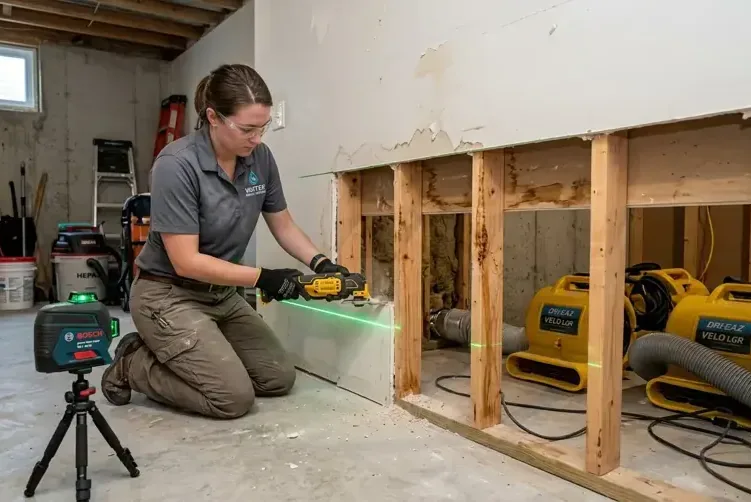
Open the cost calculatorWhat a structural dry-out looks like, room by room

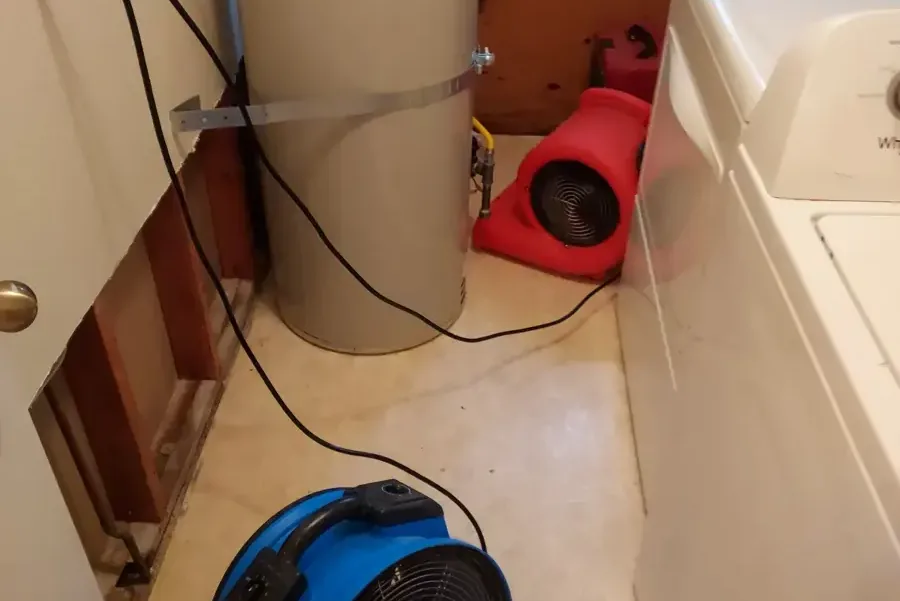

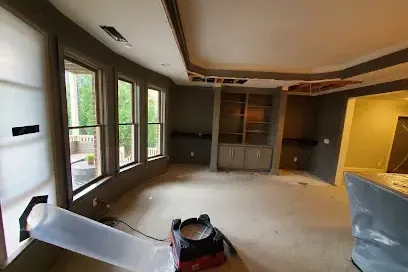
What the insurance claim file needs
A water claim is decided on the file. The restoration team builds that file from the first visit, so an adjuster can see the cause, the reach and the drying.
- A moisture map of every wet room and wall
- Daily psychrometric logs of temperature and humidity
- Timestamped photos taken before any demolition
- The water category and class of loss, recorded at the start
- A line-item scope of what was removed and why
Check your own policy
The Texas Department of Insurance notes that sudden and accidental water damage coverage pays for burst pipe damage, while flood insurance does not cover burst pipes.
Frozen pipe claims can be denied when the heat was not kept on, so it is worth reading the policy and asking the agent before the next freeze.
What to do while the water is still moving
- Close the main shutoff. Most homes have a shutoff valve where the line enters the house or at the meter box. Closing it stops a supply leak from feeding more water.
- Keep clear of wet outlets. Water on the floor near outlets, cords or the panel can be live. Cut power at the breaker only if the panel area is dry.
- Photograph before you move anything. Wide shots and close-ups of the high-water mark, the source and the damaged contents help the claim file later.
- Lift what can be lifted. Rugs, electronics, papers and furniture legs come up off the wet floor, and foil under furniture feet keeps stains out of carpet.
- Call before it reaches the drywall. Drywall wicks water upward fast. Getting extraction started early keeps the dry-out to the floor instead of the walls.
One call reaches a 24/7 Azle response team
Dispatch runs around the clock for homes and businesses on both sides of the county line, from the older blocks off Main Street to the lake streets east of town.
Not sure a street is covered? Call anyway; the dispatcher confirms coverage and gets a crew moving.
Azle, TX · [email protected]
Ring the 24/7 response teamFrom Main Street to the Eagle Mountain Lake shore
Neighborhoods and corridors
Nearby towns

Why water damage hits Azle homes the way it does
Azle grew from about 800 people in 1940 to 13,369 in the 2020 census, as farm fields turned into housing. That mix of building eras shapes where water gets in.
- Hard freezes. North Texas cold snaps split supply lines in attics and exterior walls, and the real flood often starts on the thaw. State insurance guidance tells owners to close the shutoff valve when pipes freeze.
- Three settler creeks. Ash, Silver and Walnut Creeks run through the ground the first settlers chose, and heavy storms push muddy runoff toward low yards, garages and slab edges.
- Slab-on-grade houses. A house built on a concrete slab hides its supply lines under the floor, so a leak shows up first as a warm spot, a high bill or damp carpet.
- Every era of plumbing. Homes from each decade of growth sit side by side, from older metal supply lines to newer plastic ones, and each type fails in its own way.
- Sewer backups. The City of Azle Utility Maintenance department asks residents to call when sewer backs up into a house; the cleanup inside is still Category 3 work.
February 1934: Eagle Mountain Lake began filling behind a new dam on the West Fork of the Trinity River, east of town.
Every category of water damage, handled start to finish
Category 1, clean water
From a supply line, a water heater or a slab leak. Extracted and dried in place before it sits long enough to degrade.
See water extractionCategory 2, gray water
From a washer, a dishwasher or an overflow. It carries some contamination, so soaked pad comes out and surfaces get an antimicrobial.
See appliance leaksCategory 3, black water
Sewage backups and creek or storm runoff. Containment, removal of porous materials and an EPA-registered antimicrobial at its dwell time.
See sewage cleanupWater damage questions from Azle homeowners
Water in the house right now?
Skip the reading for now. Close the main shutoff if it is safe, stay off wet floors near outlets, then call the 24/7 team.
(888) 527-9134 Ask the drying team nowHow fast can a crew get to a home here?
Dispatch runs 24/7 and active water is treated as urgent at any hour. Arrival depends on where the nearest crew is and the time of day, so the dispatcher gives a time on the phone instead of a promise on a web page.
Is a burst pipe covered by homeowners insurance in Texas?
The Texas Department of Insurance notes that sudden and accidental water damage coverage pays for damage from burst pipes, and flood insurance does not. Frozen pipe claims may be denied if the heat was not kept on. Check your own policy.
What should I do first when a pipe freezes and splits?
Close the main shutoff valve, open a faucet to relieve pressure, keep clear of wet outlets and photograph the damage. Then get extraction started before the water reaches drywall and the slab edge.
How long does drying take?
A contained Class 1 or 2 loss often dries in three to five days. Wet slabs, hardwood and walls soaked high take longer. Equipment stays until materials read within 2 to 4 points of a dry reference.
What is the IICRC S500 standard?
IICRC S500 is the industry standard for water damage restoration. It covers inspection, water categories and classes, extraction, drying goals and documentation, so the job is judged by readings rather than by touch.
When does drywall have to come out?
Drywall soaked by Category 3 water comes out. Drywall wet with clean water can often be dried in place if extraction starts fast; a flood cut is made when readings stay high or the wall cavity holds wet insulation.
Why is sewage handled differently?
Sewage is Category 3 water carrying bacteria and viruses. Crews wear protective gear, set containment, remove porous materials the water touched and apply an EPA-registered antimicrobial at its labeled dwell time.
Why does creek and storm runoff count as contaminated water?
Water that crosses yards, streets and creek banks picks up soil, fertilizer and sewage. Once it enters a building it is treated as Category 3, the same as a sewer backup.
How is the cost figured?
Cost follows the water category, the square footage, the material class and the number of drying days. A walkthrough with a moisture map sets the scope, and the cost calculator shows typical ranges.
Why act within 24 to 48 hours?
Wet drywall, pad and wood can start growing mold within 24 to 48 hours. Fast extraction and drying keep a water loss a drying job instead of a much bigger one.
Water spreading through the house? Every hour adds to the job.
Extraction, drying and claim documentation around the clock, from Main Street to the lake shore.
(888) 527-9134Stop the spread, phone now